Distributed computing. The Ukrainian GRID (UGRID). GRID SDK.
Distributed computing is hardly a new subject in Ukraine. Right through my student years, 2005-2010, everyone in my department talked about it, yet nobody was doing any serious work on it. There were attempts, of course – to build a supercomputer, or to stitch together a meta-computing network out of ordinary users’ machines, to make better use of the computing power we had sitting idle, so to speak – but as I said above, none of it ever took hold.
But today all that has changed sharply. In large part, the catalyst for distributed computing in Ukrainian research has been CERN and the Large Hadron Collider (LHC) experiments.
There is plenty on what a grid (GRID) is, on Wikipedia and on other sites, and if you have landed on this article you almost certainly know the term already.
The main purpose of a grid is to provide the conditions for using a distributed computing system to solve complex scientific and applied problems that need large computing and data storage resources. (c) infrastructure.kiev.ua
State support for the Ukrainian Grid came only a few years ago, and the National Academy of Sciences of Ukraine is now working hard in this area.
The Ukrainian National Grid (UNG) brings together Ukrainian researchers from a range of fields (physics, economics, medicine, biology, chemistry and so on) to build a single grid infrastructure for the country.
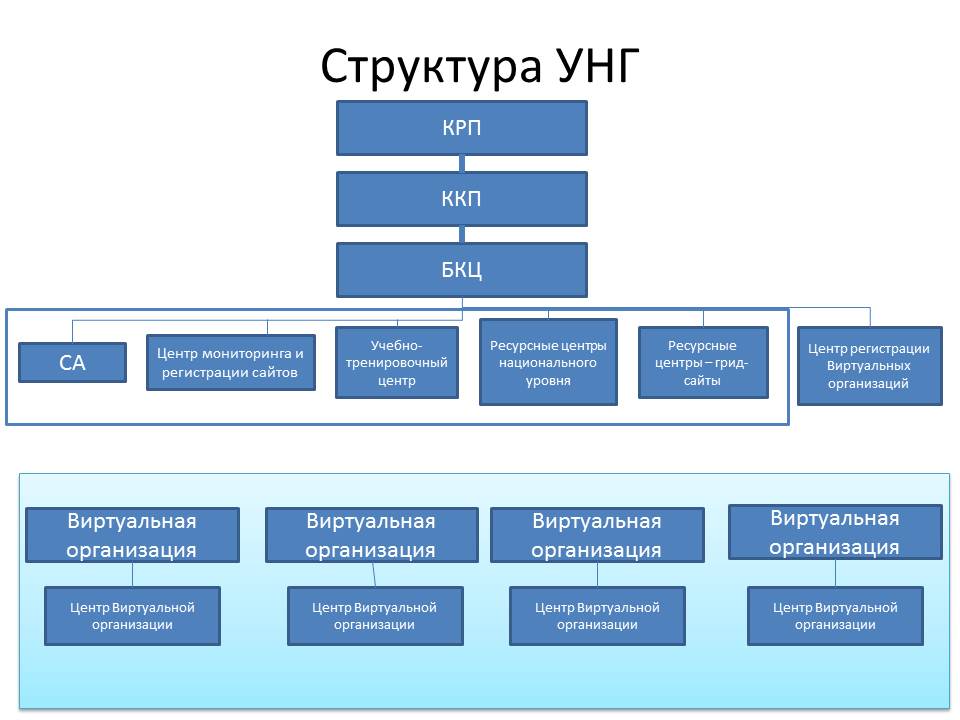
The Ukrainian grid programme is set out in detail on the official site: grid.nas.gov.ua
The Institute of Industrial Economics of the National Academy of Sciences of Ukraine in Donetsk (IIE NASU) and the Research Centre for Information Technology (RCIT) are both partners in the “Ukrainian GRID” project, and our contribution comes from the field of economics.
As a postgraduate at the institute and a member of the research centre, I have used this project as a proving ground for designing and building a good many fresh ideas about how to develop the grid infrastructure.
This year, together with the Department of Information and Computer Systems at Chernihiv State Technological University and the Department of Computer Technology at Donetsk National University, we made a start on a toolkit for developers who write applications for the distributed GRID environment, under the working title “GRID SDK .NET”.
It is a set of dynamic-link libraries for the Microsoft .NET platform, and it automates the interaction with grid clusters.
It should be genuinely useful to programmers who write application software.
Say a research organisation sets a task: “We need to assess the economic development of the city’s industrial enterprises”.
That task has three stages:
-Building the model;
-Collecting the data;
-Running the calculation;
If the task is resource-hungry and cannot be turned around quickly on a desktop machine in something like Excel, then it has to be computed on the grid. That sounds simple enough, but before a task can be computed on the grid it has to be adapted for the grid. At the very least, you have to express the mathematical problem in a programming language the compilers on the clusters accept, and describe the job in xRSL. So the work gets handed to technical specialists, who take a certain amount of time to write the program, submit it to the grid and hand back the results. All of that costs time and money. That is fine if the results are not urgent and are wanted only once – but what if the turnaround is a matter of hours and the conditions of the problem keep changing? In that case it is cheaper to hire programmers to build dedicated software that sends the data to the grid for computation automatically. The people using that software can be economics experts with no technical training: they get a simple graphical tool for describing their problems and reading off the results (software of this kind is exemplified by our own IASBP system) .
That is exactly what we are building GRID SDK for. The first version of the SDK was tested when we adapted the Information and Analytical System for Budget Process Support (IASBP) for distributed computing on the grid. That system is in fact what the SDK was meant for in the first place, and all of its functionality was broken up into separate modules. Later, though, the project partners decided to bring the functionality of those modules together into a single working tool, GRID SDK.
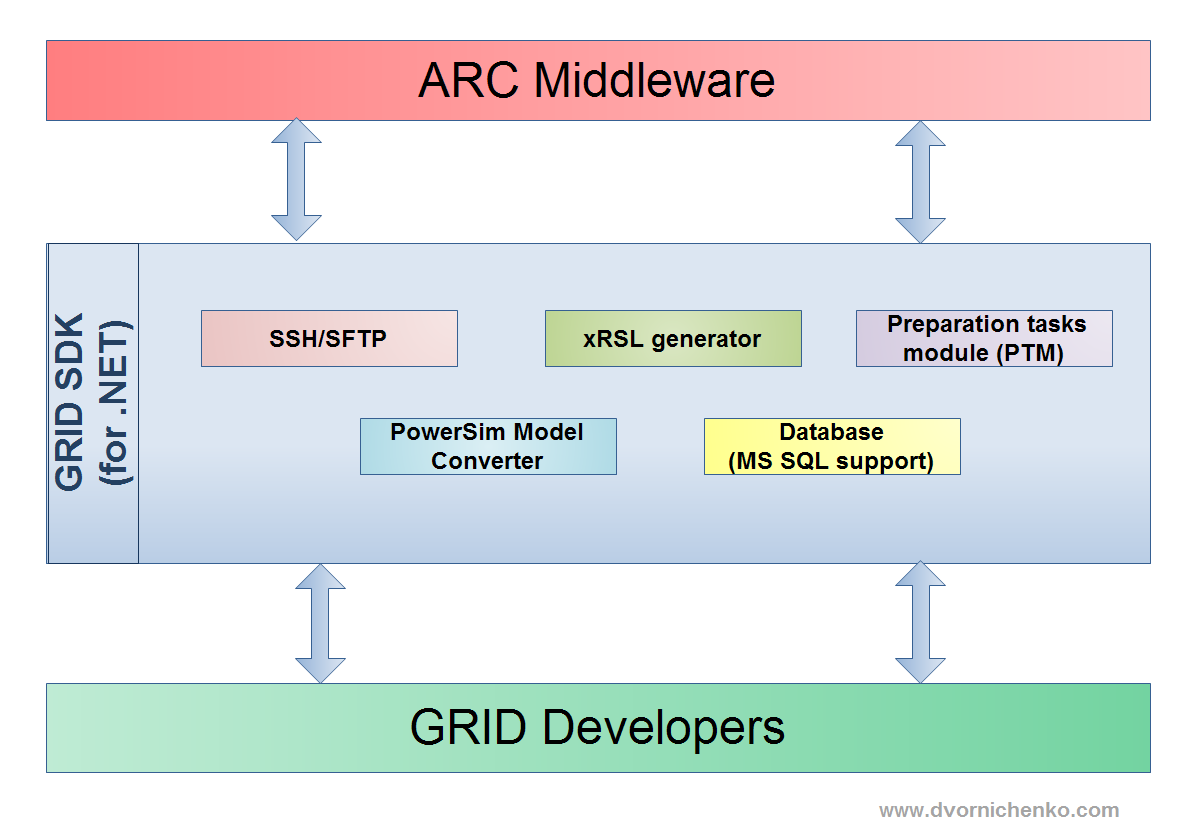 Right now our programmers are testing and debugging the SDK, and before long it will be freely available to download and use.
